CROSSROADS: Unlock Windsor Essex’s Secrets with Nina
Hey besties, it’s your local guide and adventure buddy, Nina! If you’ve ever wondered what it’s like to time travel, I’ve got the perfect adventure for you. From streetcars to sky-high adventures, each stop on this journey uncovers a chapter of Windsor Essex’s incredible history.
Pack your curiosity (and maybe a coffee)- we’re heading back in time. The Crossroads Historical Guide isn’t just a ticket through museums and landmarks – it’s a time machine through Windsor Essex’s most fascinating eras. It’s a free, self-guided digital passport that lets you explore over 50 incredible landmarks that connect the past to its living present.
Imagine wandering through historical forts, grand manor houses, and sacred spaces that have stood the test of centuries. Each site tells a story of resilience, innovation, and the people who built the foundation of who we are today. Think of it as a digital time capsule that brings our region’s stories to life – no time machine required.
View this post on Instagram
3 EASY STEPS
- REGISTER for your free Crossroads pass – it’s sent directly to your phone via text or email, no app needed!
- EXPLORE any historical stop across Windsor Essex – each one has fascinating stories, photos, and facts.
- CHECK IN at each location and complete fun trivia.
Bonus: There are special themed guides throughout the year – Black History Month (February), Indigenous History Month (June), and Ghost Stories (October) – so there’s always something new to discover!
TIME TRAVEL ITINERARY: 6 WAYS TO EXPLORE WINDSOR ESSEX HISTORY
Each chapter of our region’s story connects the past with the present – every stop is a chance to step into history. Ready to step back in time and choose your adventure? Here’s a glimpse at some of my favourite stops that bring our history to life.
Transportation
Legacy Beacon Streetcar No. 351 | 780 Riverside Dr W., Windsor
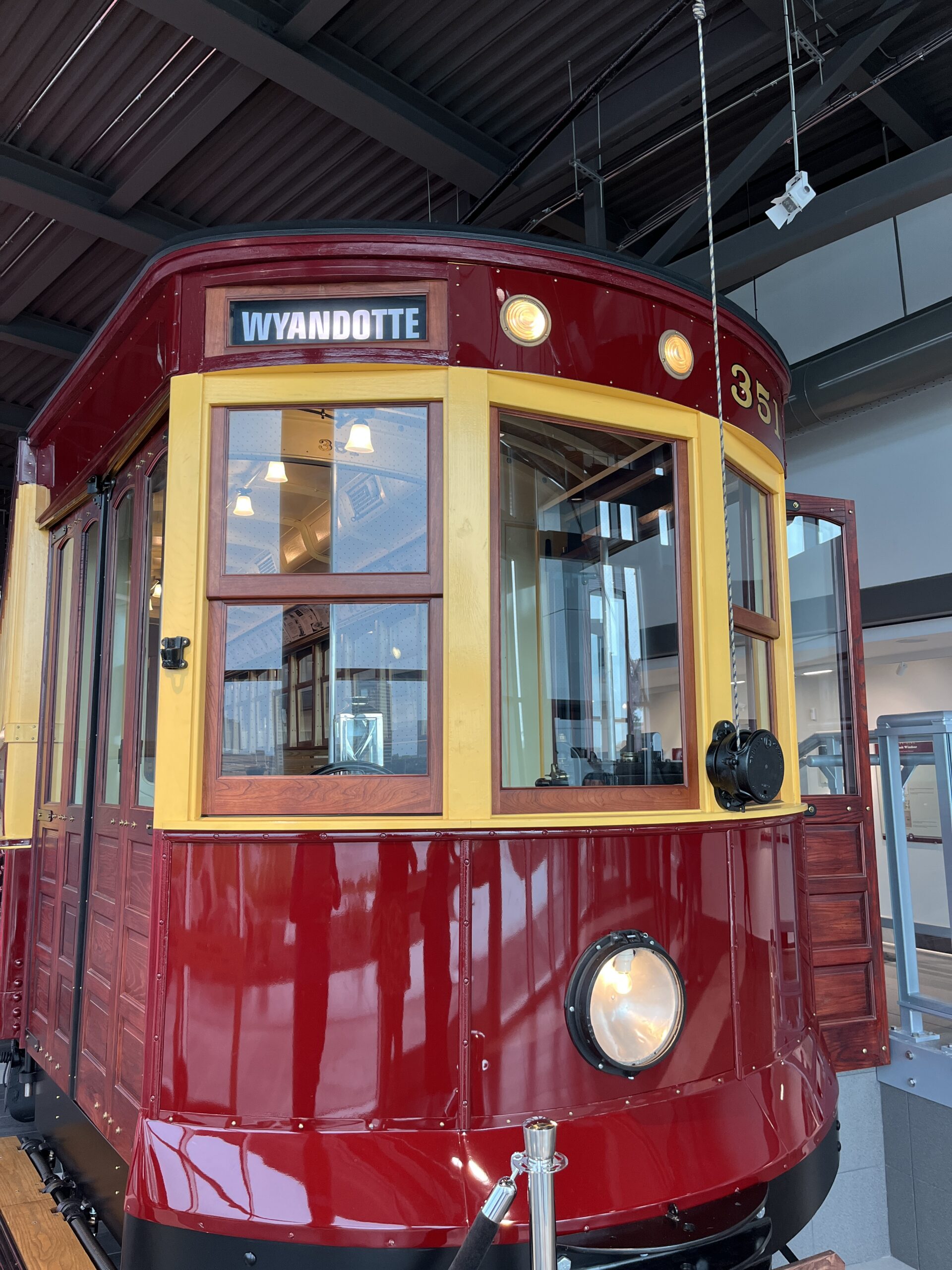
Sitting proudly along Windsor’s scenic waterfront, this 1918 electric streetcar is more than a photo op -it’s a preserved piece of Windsor’s transportation history. Once capable of carrying 50 passengers, Streetcar No. 351 was part of the network that connected Windsor, Walkerville, and surrounding towns long before cars dominated the roads.
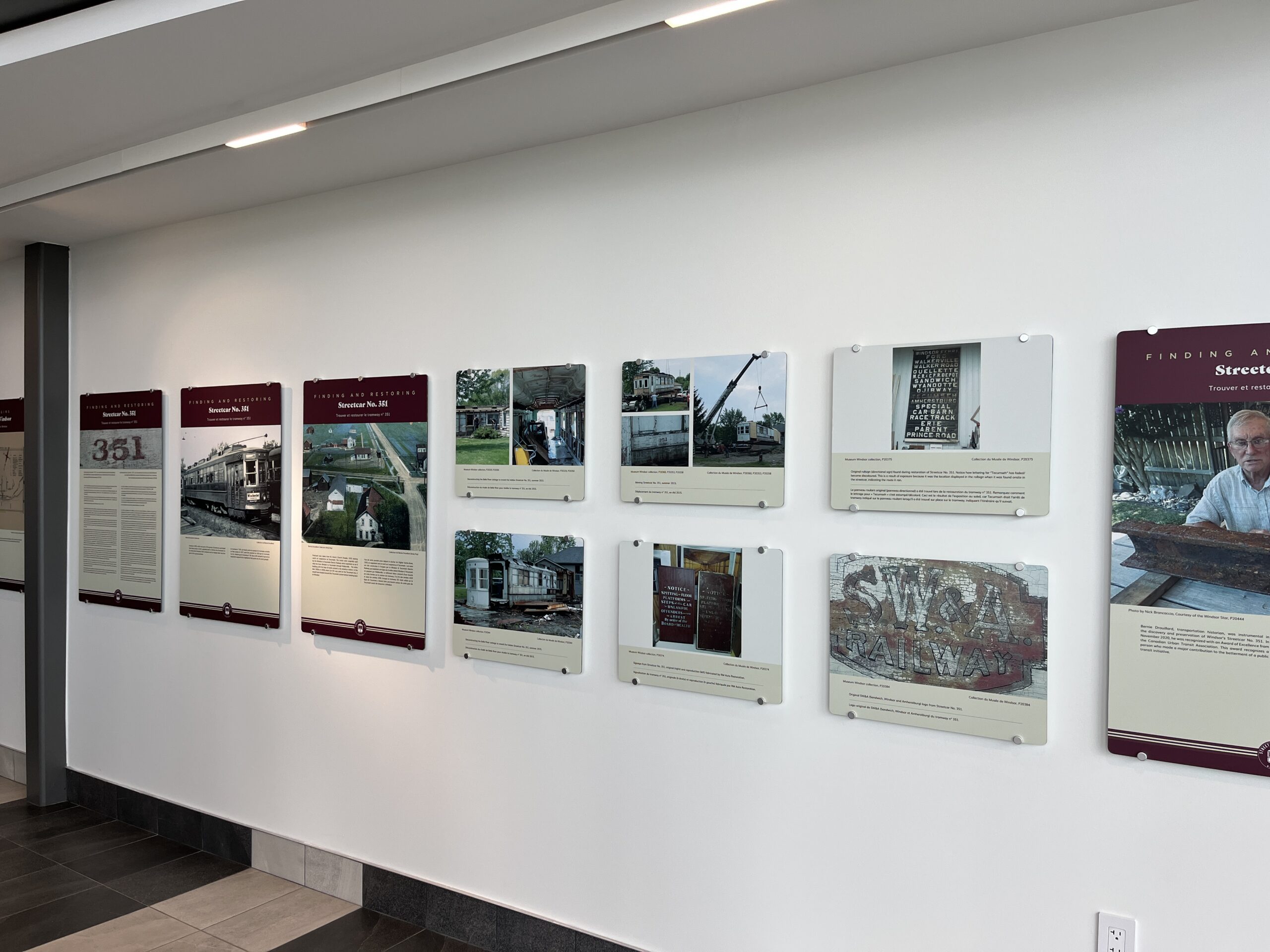
Inside, you’ll find real advertisements from 1927-1939, a nostalgic glimpse into the golden age of streetcars and how life was during that time. Fun fact: this same streetcar was hidden inside a Belle River cottage for decades before being beautifully restored! Did you also know that it used to be 7 cents a ride?
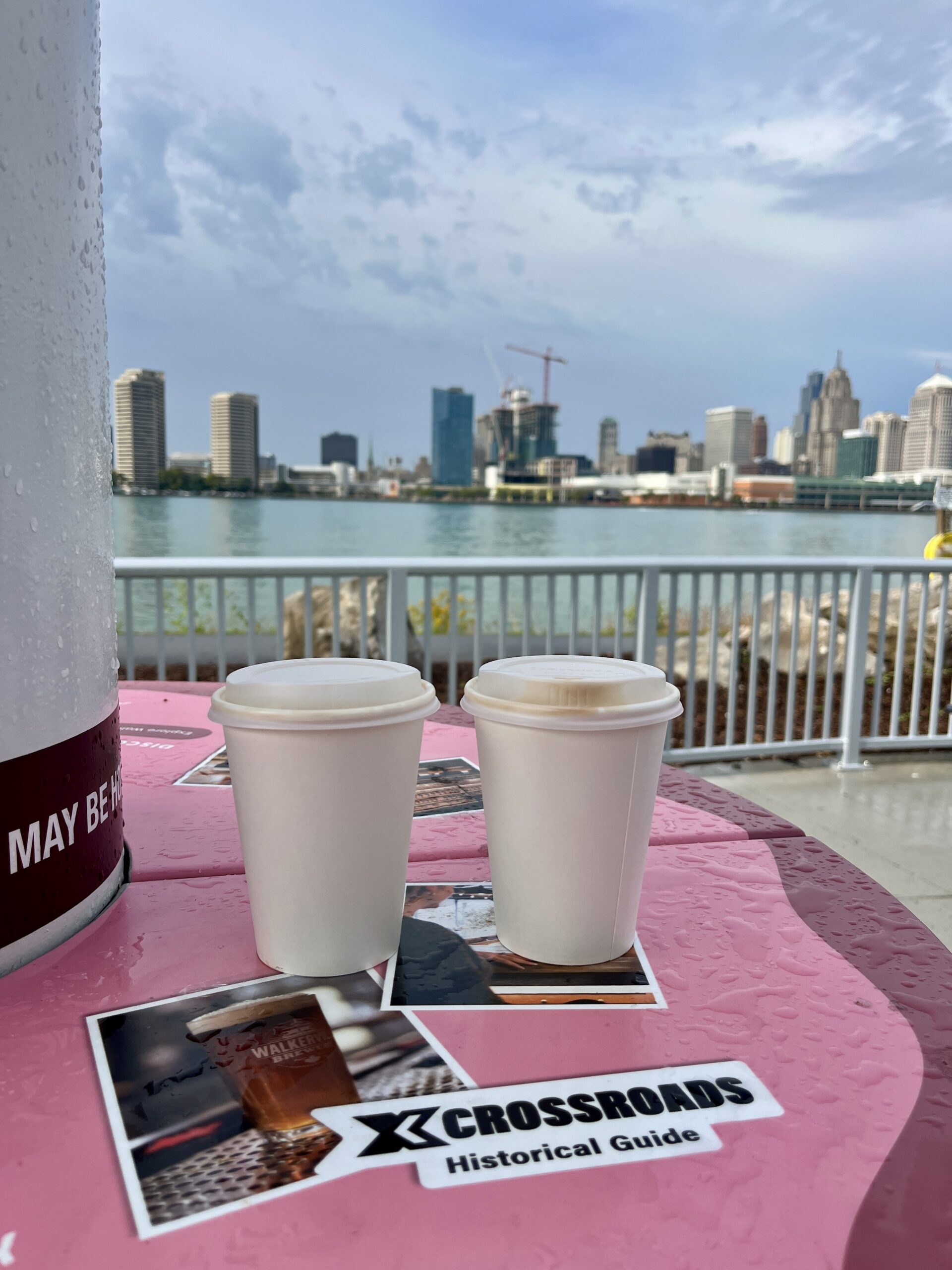
The Legacy Beacon isn’t just an exhibit – it’s a full experience. There’s a concession on-site that serves warm food, drinks, and features local breweries and wineries. I highly recommend grabbing a coffee here and roaming through the exhibit or simply enjoy it with a turkey panini on the patio with the scenic views of the riverfront – it’s the perfect way to take in this iconic artifact that shaped how Windsor moved.
Ford City BIA and Murals
Just a short drive away, Ford City is Windsor’s historical industrial heart with rich history. The colourful murals tell stories of workers, innovators, and the community built around Ford Motor Company of Canada, which first opened its doors here in 1904. This created a new identity for Windsor as Canada’s Automotive Capital.
From viewing the Women on the Line mural to taking a stroll at the Ford Test Track, you learn many interesting facts – there was only one factor floor department that employed females and that was the magneto winding room. In addition, realizing the magnitude of Ford City’s contribution to the Second World War, as all of Ford’s resources were committed to the war effort. And lastly, the Ford Test Track was the testing grounds for Ford’s most successful and highly touted V-8 small block engines that often was the choice for police cars in the early 1970s.
Mettawas Station | 169 Lansdowne Ave, Kingsville
In Kingsville, you’ll find the Mettawas Station, a beautifully restored train station designed by Albert Kahn – Hiram Walker commissioned the architect to build the train station that reached Kingsville from Windsor. Once part of the luxurious Mettawas Hotel complex, fares round trip to Windsor were 80 cents for adults. Today, it’s a cozy Mediterranean restaurant where you can order Ontario’s best veal sandwich while dining inside a beautifully restored train station.
Canadian Aviation Museum | 2600 Airport Rd., Windsor
If you’re ready to take your adventure to new heights (literally), the Canadian Aviation Museum is a must. It celebrates Windsor’s role in Canadian aviation with vintage aircraft, guided tours, and hands-on simulators. Don’t forget to opt in for a guided tour as you’ll have an expert tell you the most interesting stories such as the Bad Penny – it’s famous for surviving countless missions against all odds and returning home.
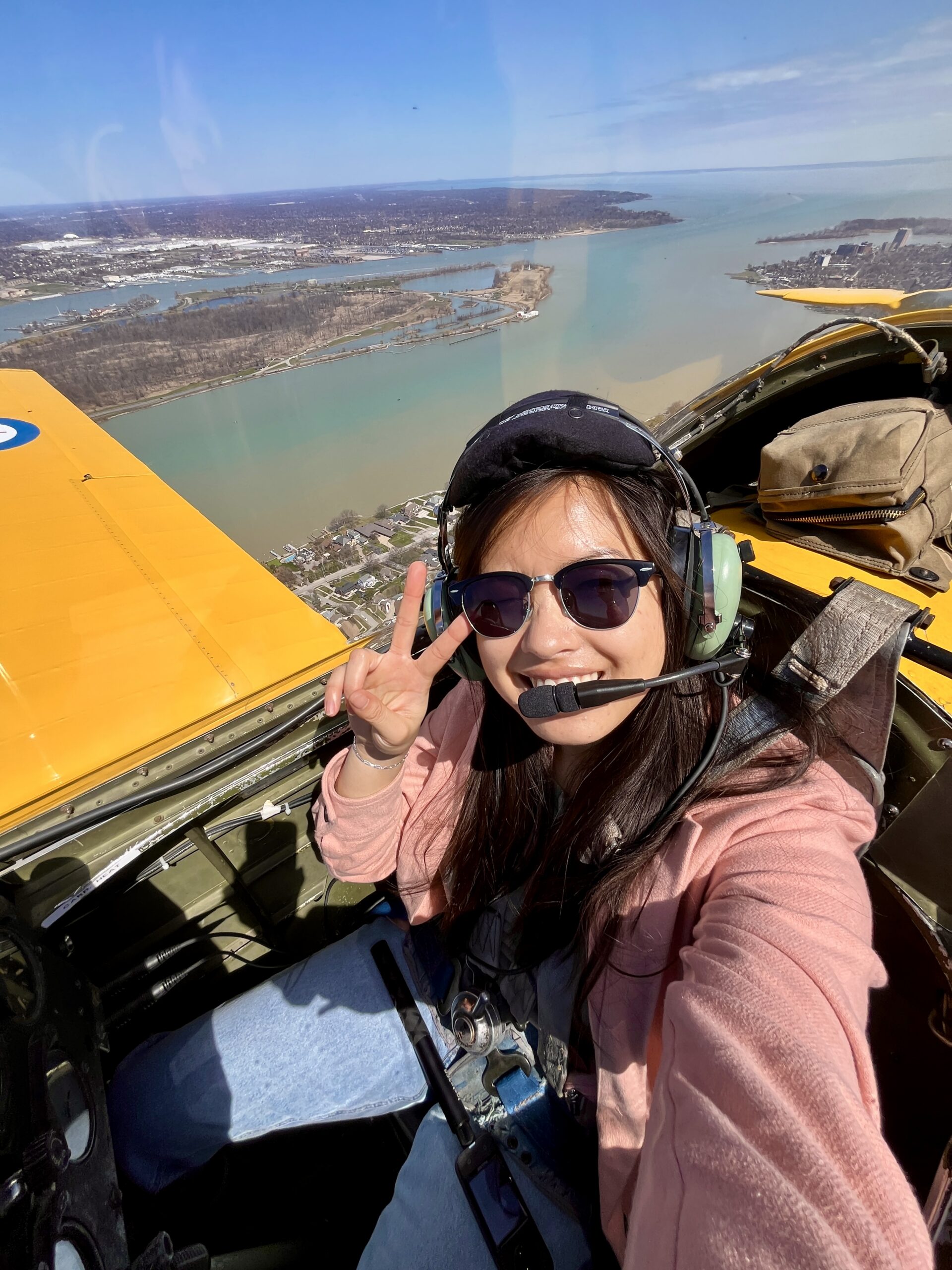
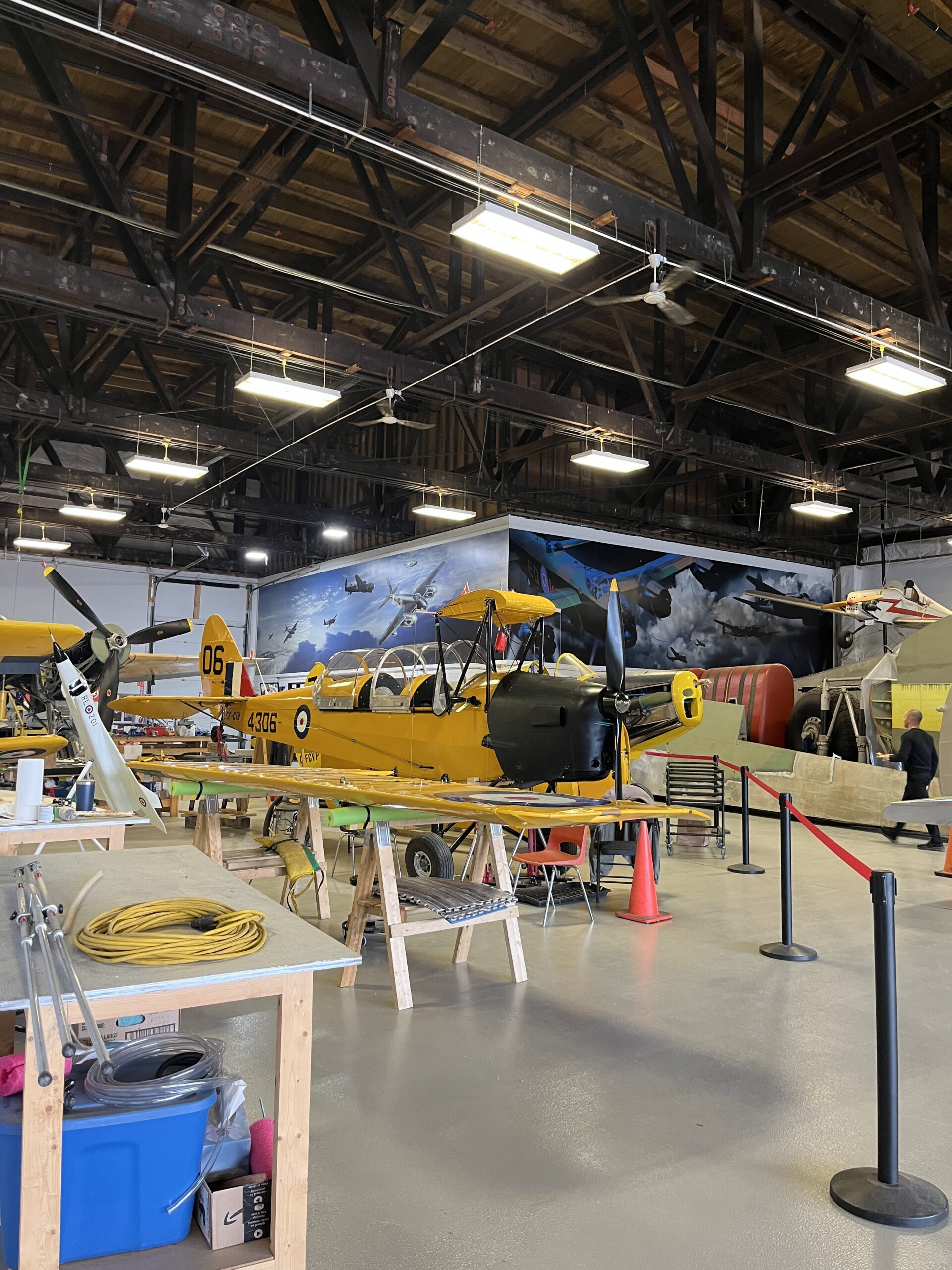

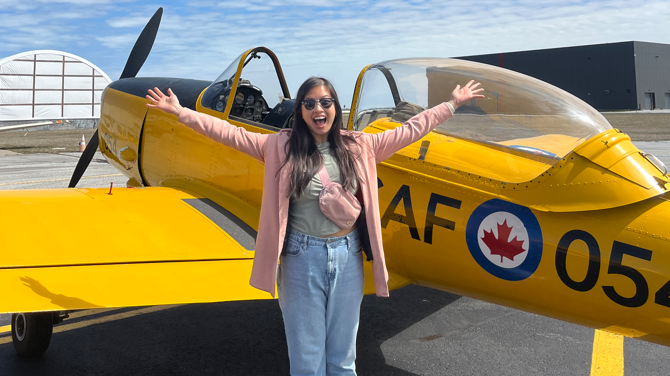
But here’s the real highlight – you can book a flight in a restored WWII-era training warcraft, overlooking Windsor-Essex County. I flew in the Chipmunk, a bright yellow Royal Canadian Air Force aircraft, also known as the “Chippie”. You’ll meet your pilot, receive a certificate, and see Windsor-Essex County from a whole new perspective. If you’re a full thrill seeker like me, tell your pilot you want to try aerobatics – it’s exhilarating! A unique, bucket-list-worthy experience I 100% highly recommend to everyone.
Black History
Amherstburg Freedom Museum | 277 King St., Amherstburg
This museum is one of Windsor Essex’s most powerful historic sites. A non-profit and community-run space, it preserves and shares the stories of freedom seekers who journeyed through the Underground Railroad. The site includes the Taylor Log Cabin and the Nazrey African Methodist Episcopal Church, both built in the 1840s. This provides an insight of life in Amherstburg during the 1800s-1900s in addition to the significance of the church, as it was a station that offered shelter, refuge, education, and safety to those escaping across the Detroit River. Visitors can take self-guided interactive tours enhanced with QR codes, letters, and video storytelling.
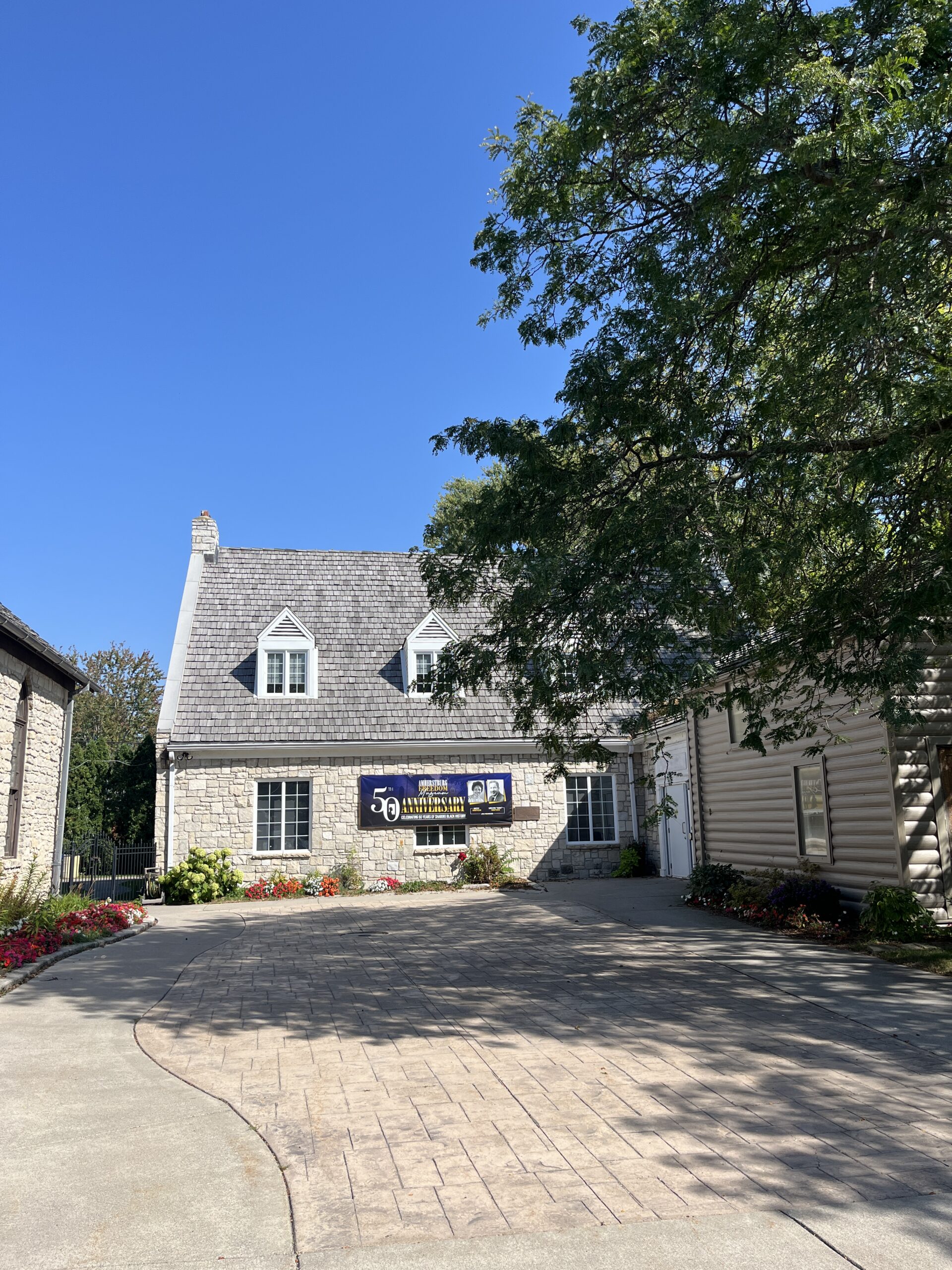
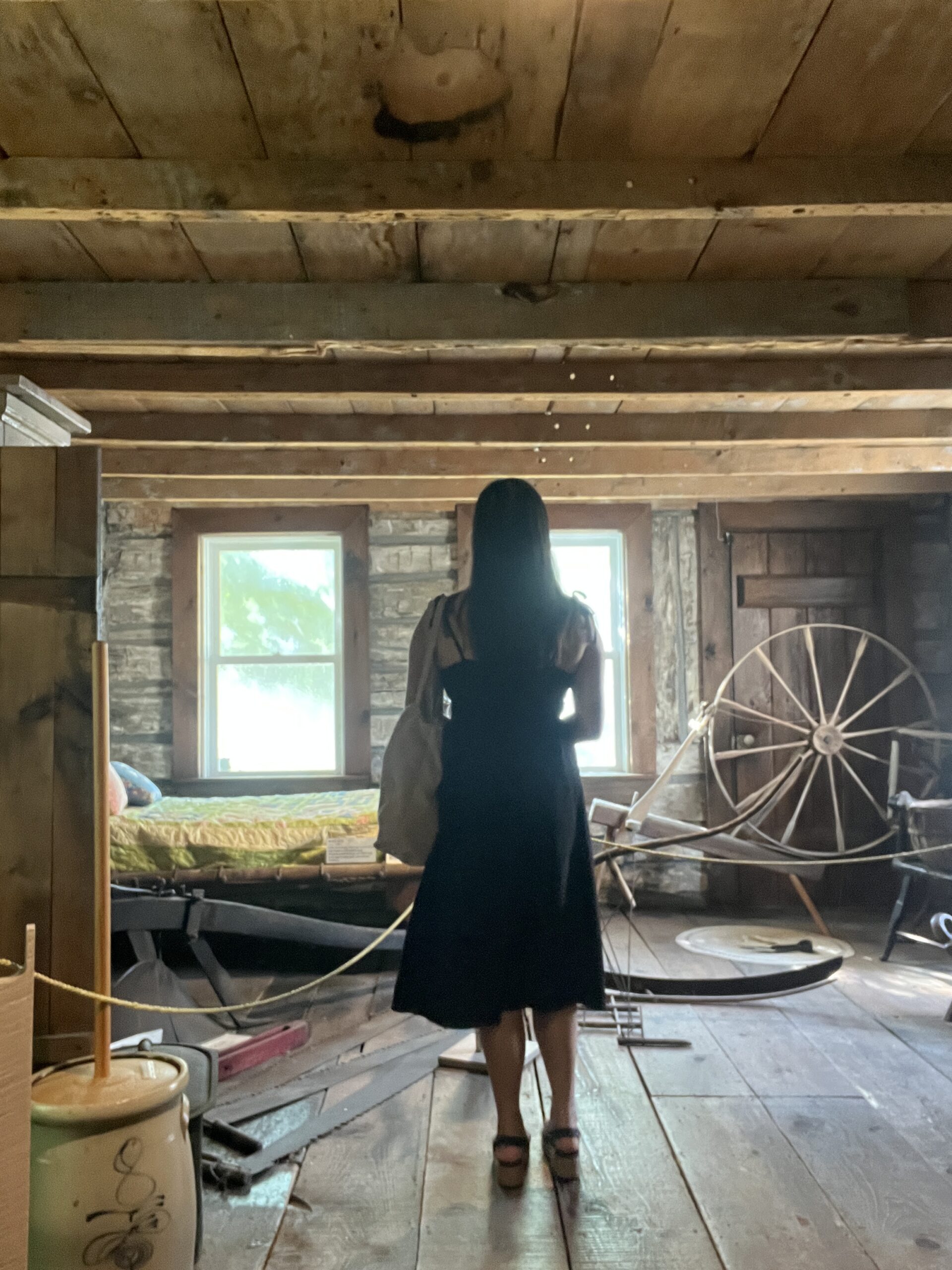
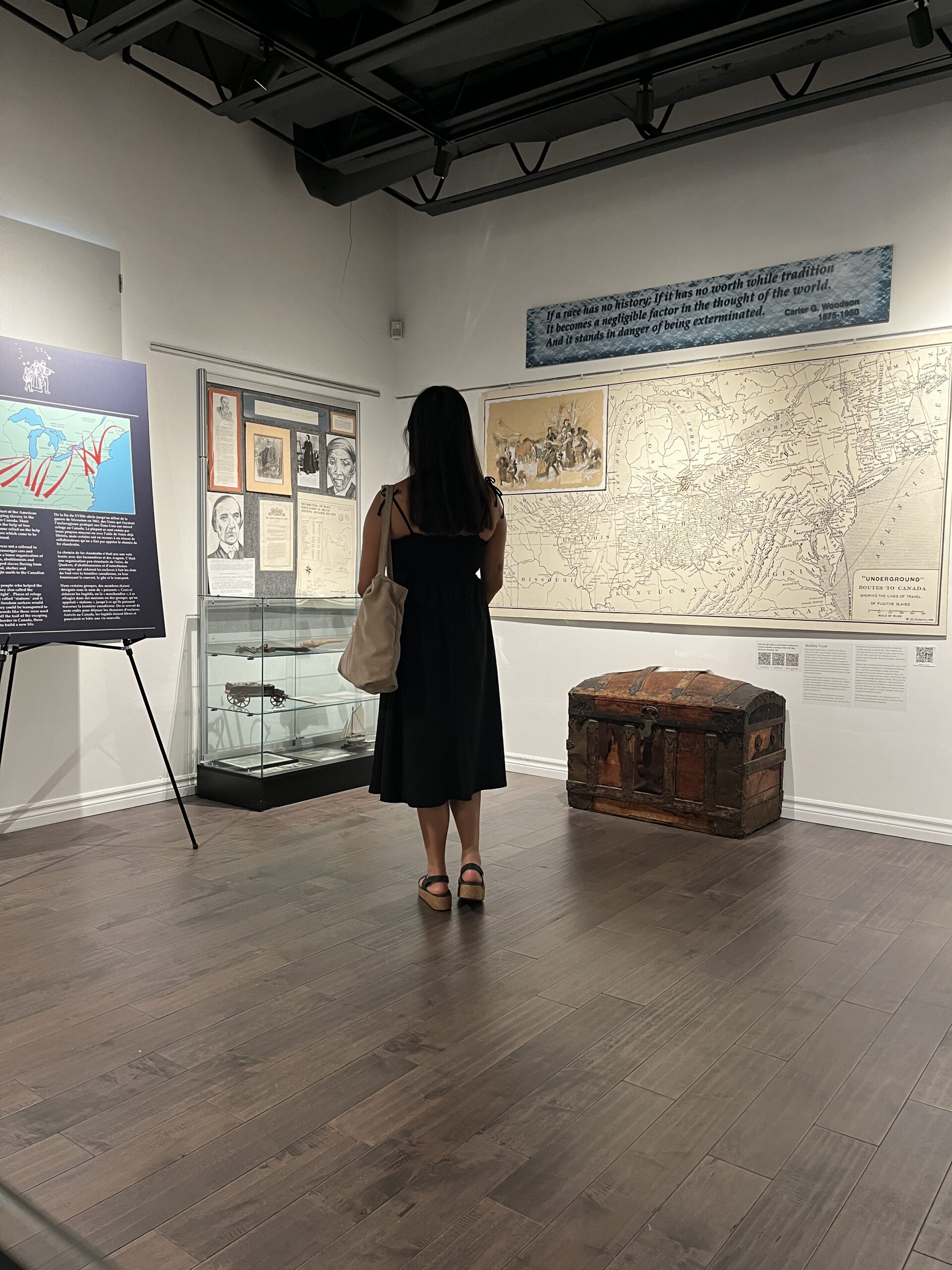
When I visited, I met Irene Moore Davis, who helped celebrate the museum’s 50th anniversary – she talked about how she had the honour of cutting the ribbon as a child when the museum first opened. Upon reflection, I truly believe it’s important to learn, ask questions, continue to celebrate resilience and achievements, and provide endless support. This museum continues to inspire through educational programs, volunteer opportunities and a deep sense of connection to the resilience of Black Canadians.
Tower of Freedom Underground Railroad Monument | Pitt St., Windsor
Honours those who made the perilous journey north. The monument faces its other monument, located in Hart Plaza, Detroit – symbolizing both sides of the River of Freedom
Indigenous History
Point Pelee National Park | 1118 Point Pelee Dr., Leamington
This sanctuary is situated at the most southern point of Canada on the traditional territory of the Three Fires Confederacy of First Nations, comprising the Ojibwa, the Odawa, and the Potawatomi. People have been living around Point Pelee for more than 1,000 years. This area and Pelee Island were crucial places to hunt, fish, and live. The park’s name comes from the French word, “pelée,” meaning bald, describing its open marshlands. With lots of activities ranging from walking to kayaking, I highly recommend checking out the Birding Trail Digital Pass!
Ojibway Prairie Complex | 5200 Matchett Rd., Windsor
There are plenty to explore across the complex of Ojibway Park, Tallgrass Prairie Heritage Park, Black Oak Heritage Park, Spring Garden Natural Area, and Oakwood Natural Area. Trails are suited for walking, connecting to nature, birding, photography and more. It is presumed that Ojibway was named after a band of native Aboriginals that had a small settlement along the Detroit River. Ojibwa, or Chippwea, comes from the Algonquin word, “otchipwa” (to pucker) and refers to the distinctive puckered seam of Ojibway moccasins. I highly recommend going to the Ojibway Nature Centre first to learn about the history and you’ll find this complex attracts numerous species!
Caldwell First Nation | 14 Orange Street, Leamington
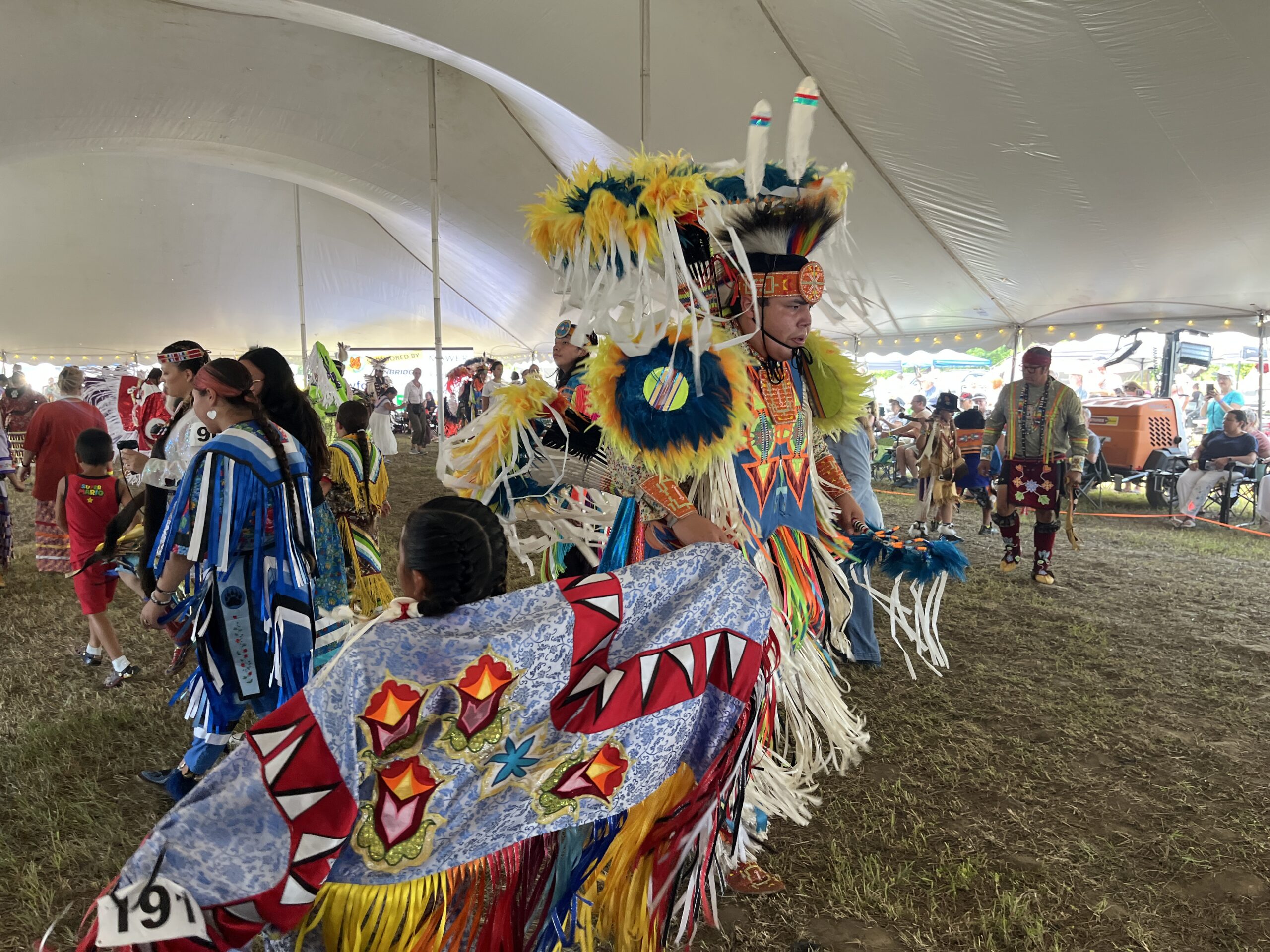
Caldwell First Nation is a proud Anishinaabe community and are known to be the “People of the Lake”. There is an annual Pow Wow in Leamington, which is an unforgettable celebration of culture, tradition, and community. If you’ve never attended one before, read my Visitor’s Guide to Caldwell’s First Nation’s Pow Wow here, to help you experience the event in a way that’s both fun and respectful, so you can celebrate alongside the community and carry those memories with you long after. It’s a 2-day event which showcases Indigenous music, dance, regalia, food and crafts, a beautiful expression of their identity. It is located on their reserve on Mersea Road, Leamington. Let’s continue to live the good life – Mino Bimaadiziwin!
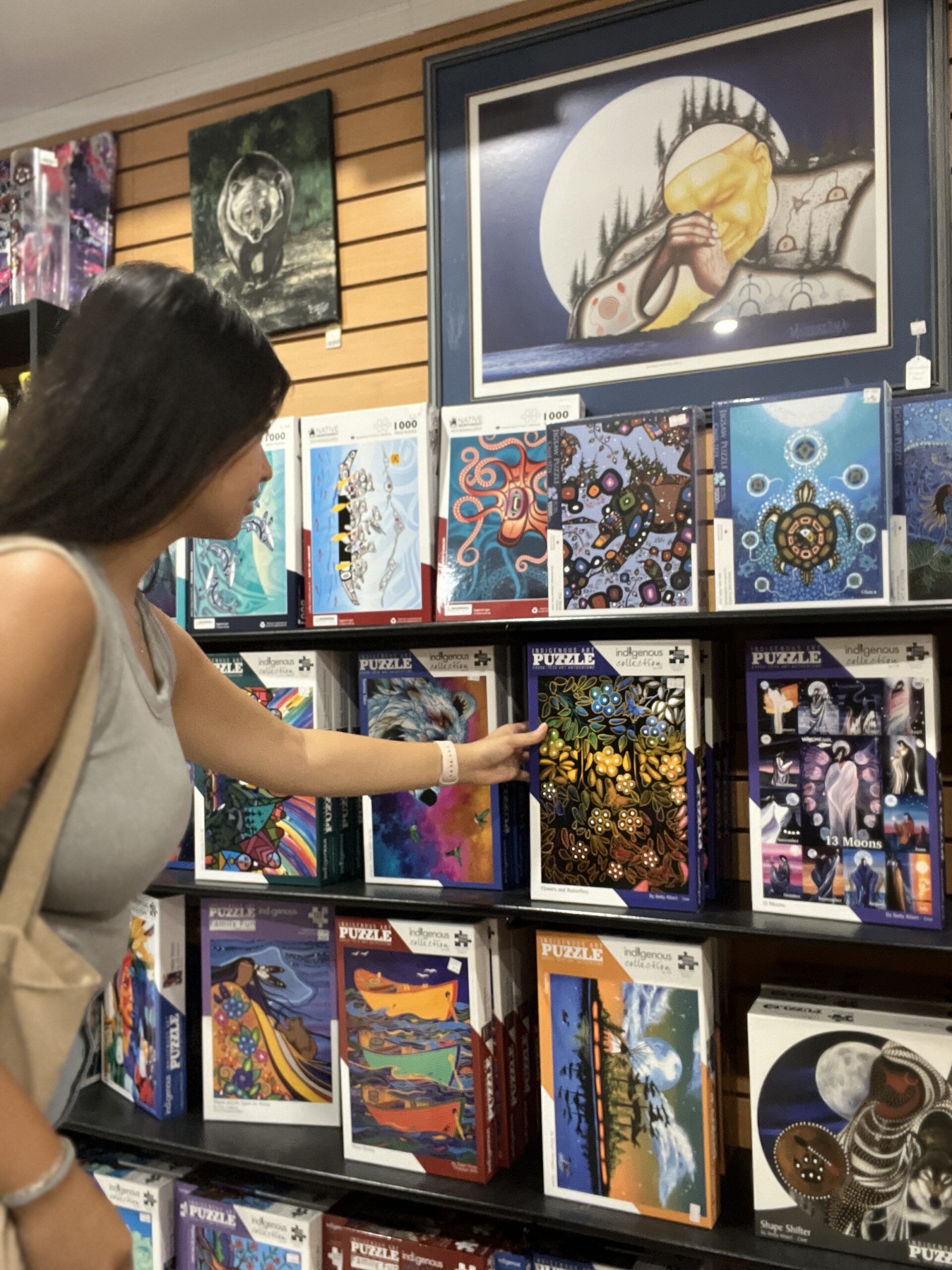
Native Wonders Gifts and Gallery | 1239 Ottawa St., Windsor
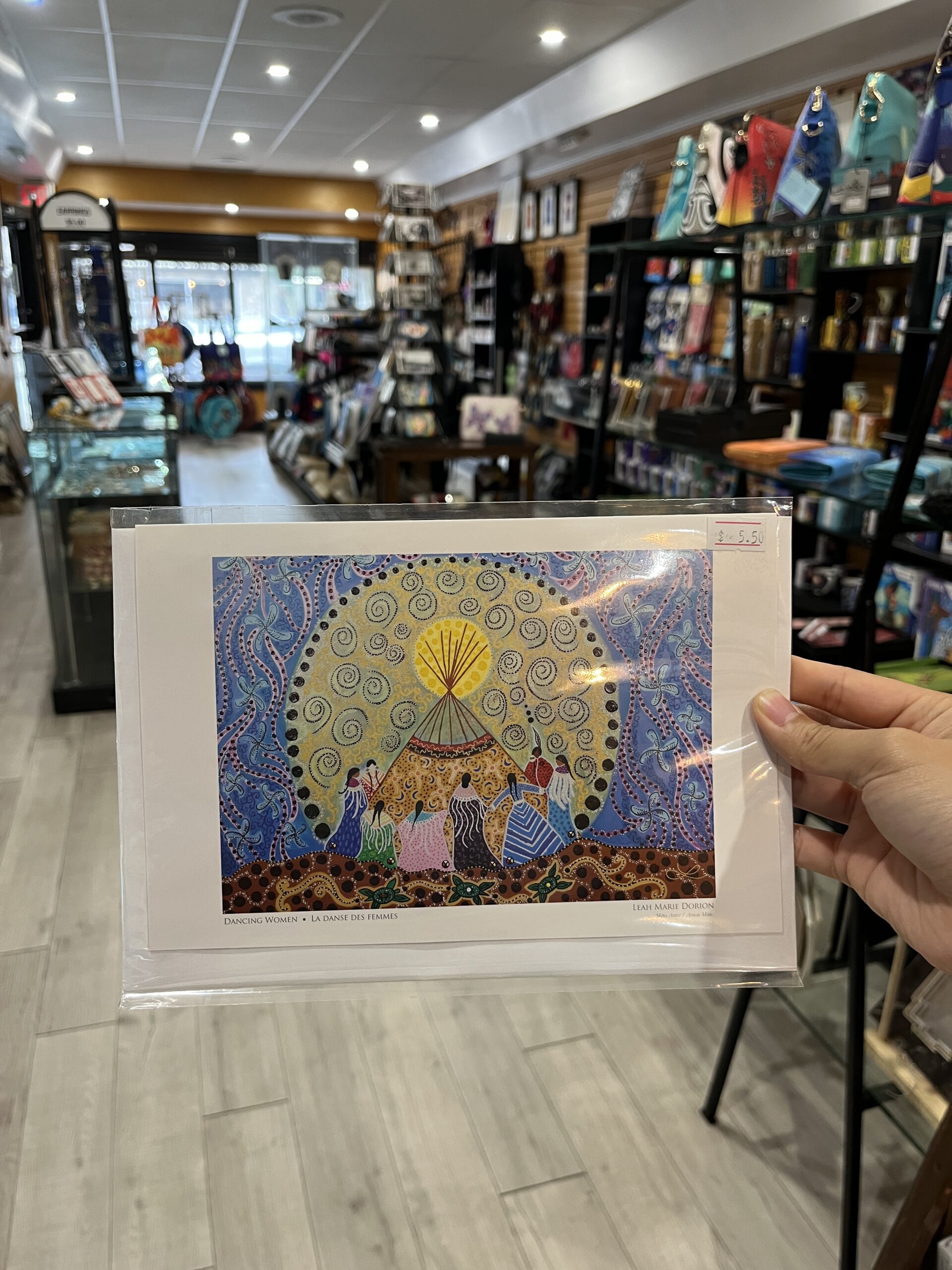
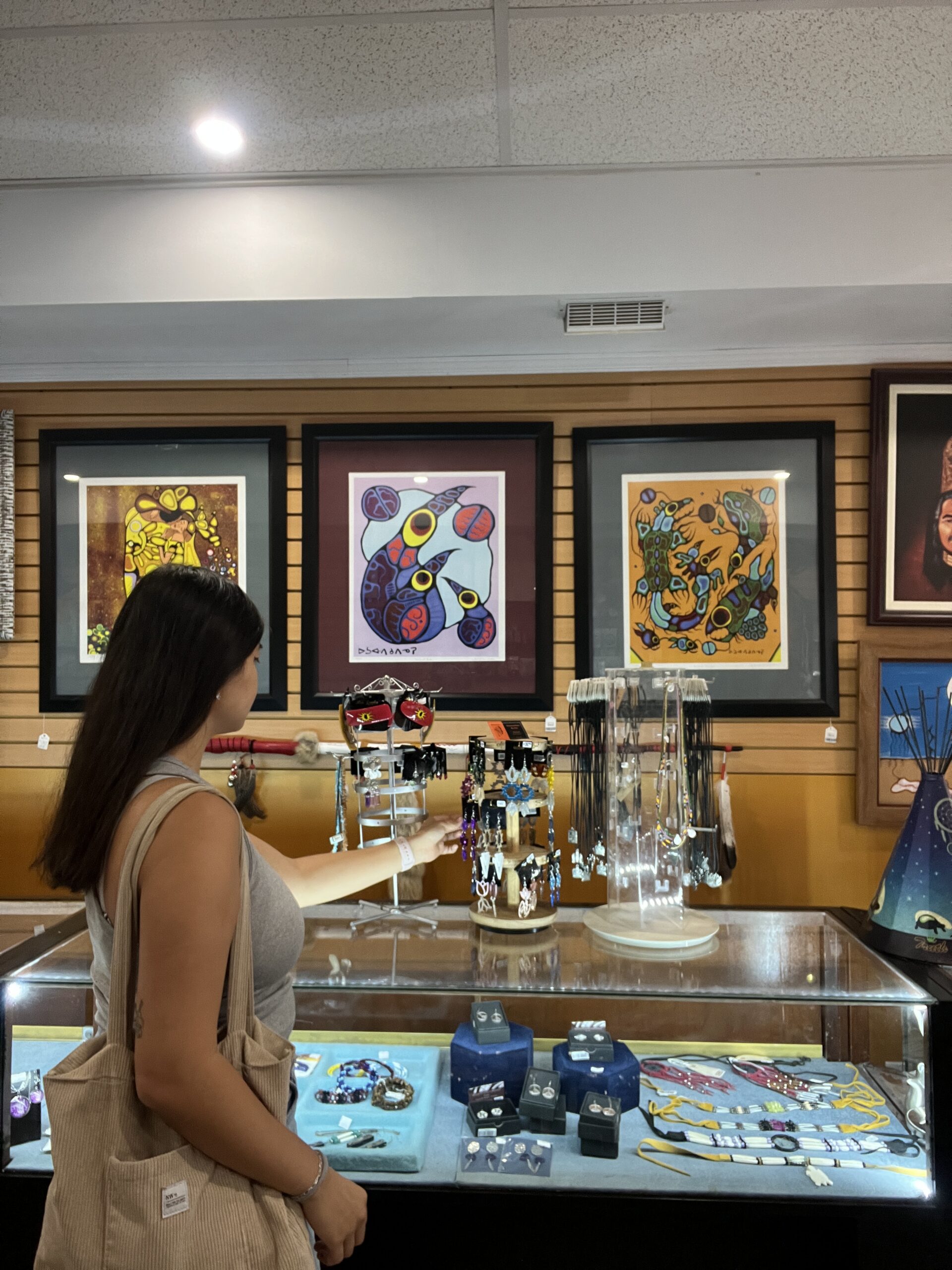
Located on Ottawa Street, Native Wonders Gifts and Gallery is owned by Odawa artist, Mark Peltier, whose work beautifully weaves traditional Indigenous themes with modern creativity. I highly recommend visiting, as you might have the opportunity to hear fascinating stories from Mark, ranging from his experiences attending Pow Wows to his first pop-up as an artist on Boblo Island years before opening the gallery. Inside, you’ll find everything from handcrafted jewelry to cultural artwork – all supporting Indigenous artists and entrepreneurs. One of my favourite postcards I purchased was called Dancing Women by a Metis artist, Leah Marie Dorion.
Prohibition
Chimczuk Museum | 401 Riverside Dr W., Windsor
Named after Joseph Chimczuk, a passionate historian, poet, and artist who also worked at Ford, this museum beautifully captures the spirit of Windsor Essex through time. I love that it brings together everything in this guide – from Indigenous history to the Prohibition era – all under one roof.
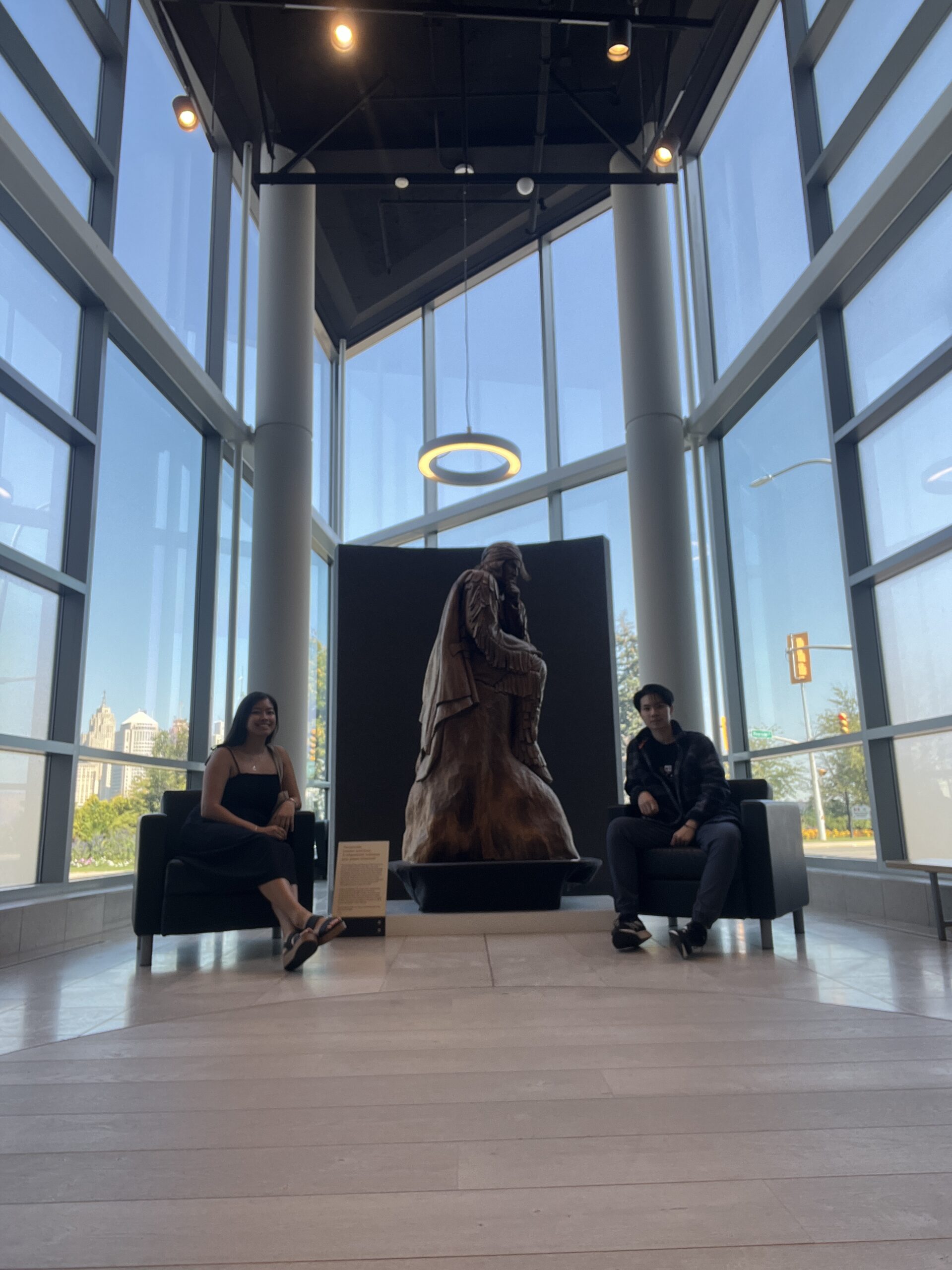
Inside, you’ll find interactive exhibits, hands-on activities, videos, artifacts, and even a charming gift shop. It’s an engaging way to explore Windsor’s spirited past. One of my favourite touches? A jacket from the Prohibition era that visitors can try on – offering a glimpse into the daring rum-runners who smuggled whiskey across the Detroit River.
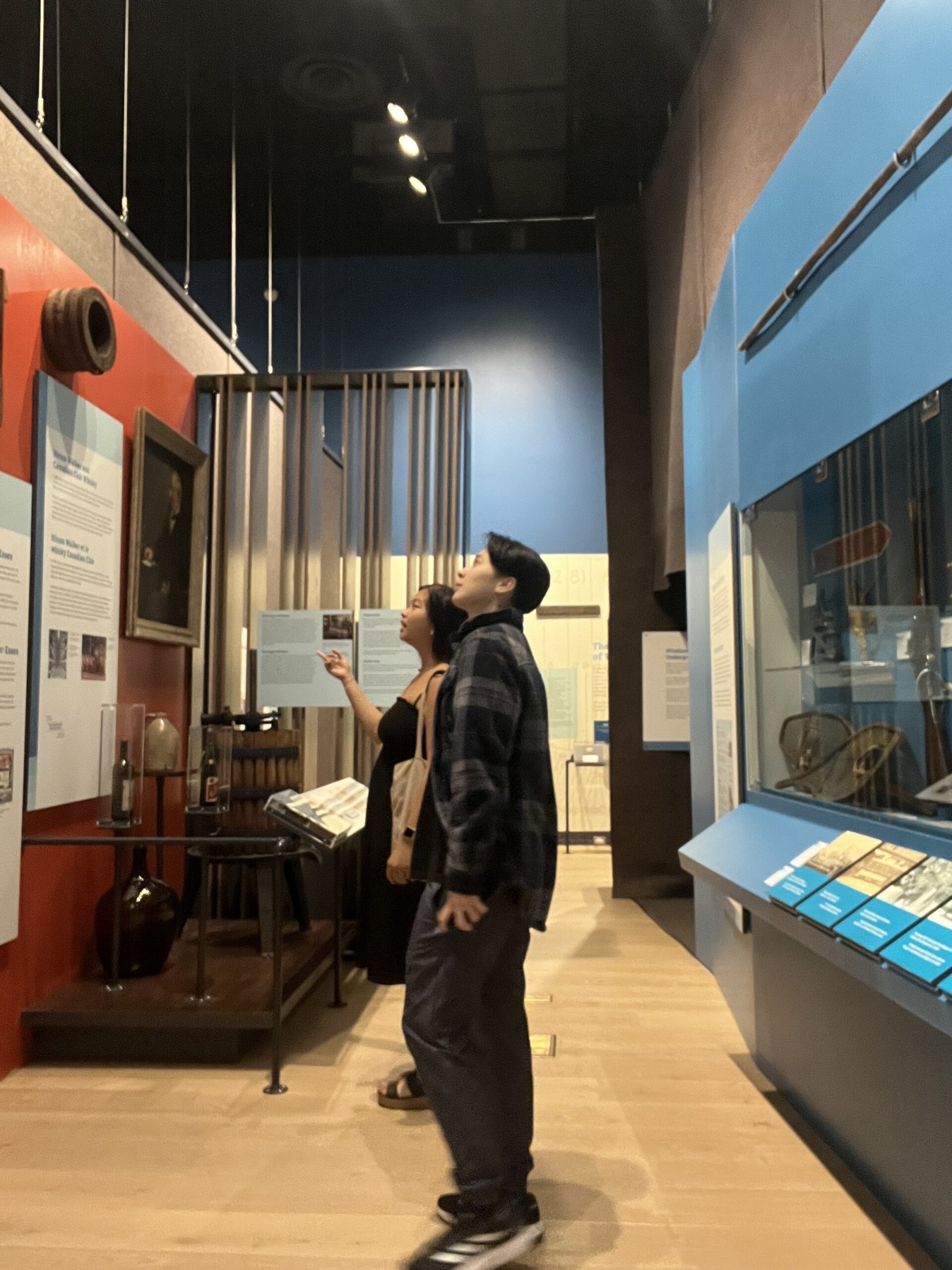
The museum also dives deeper into the region’s biggest stories – from automotive innovation and black history to the War of 1812, agriculture, and French heritage. Once sculpture that really caught my eye was of Shawnee Chief Tecumseh, the powerful military leader who fought during the War of 1812 and remains a symbol of strength and unity in this region.
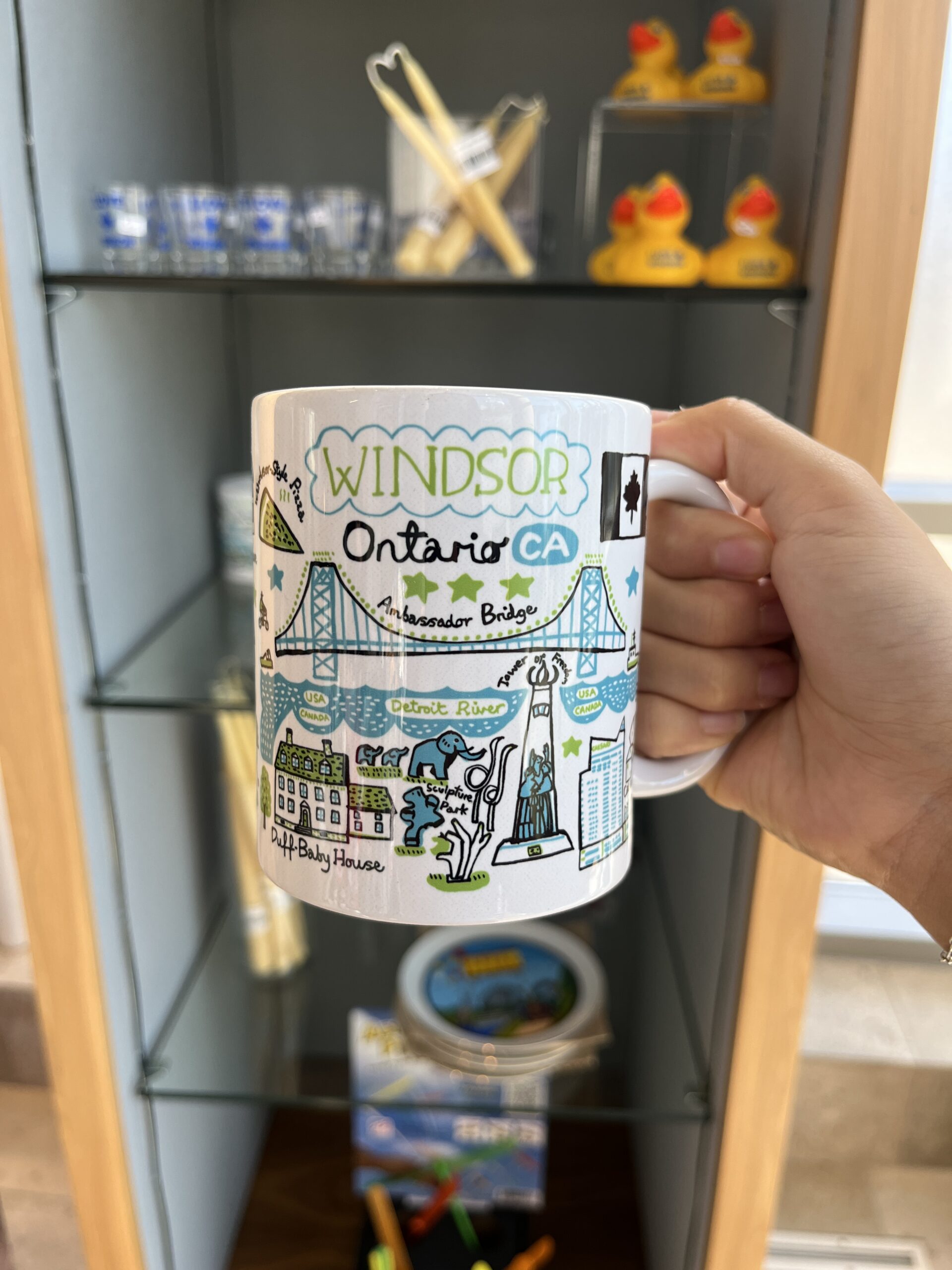
This museum is named after Joseph Chimzcuk who had a love for history – wrote poetry and books on Ukrainian heritage, painted, sculpted, and worked at Ford. I love that this museum encompasses a timeline of everything in this guide – from indigenous history to the prohibition era. This is a gallery space that features interactive activities, hands-on exhibits, videos, and artifacts, and a gift shop – it’s an engaging way to learn about Windsor’s spirited past. For example, they have a jacket you can try on from the prohibition era, where people tried different techniques to smuggle whiskey across the Detroit River. This further dives into how our city became a hub for rum-running across Windsor/Detroit.
In addition, you’ll learn deep dive into other significant events that shape Windsor-Essex County: automotive transportation, black history, indigenous history, War of 1812, agriculture, and French history. One of sculptures that caught my eye is the Shawnee Chief Tecumseh one – he’s a powerful military commander during the War of 1812.
Willistead Manor | 1899 Niagara St., Windsor
Built in 1906, the 36-room mansion features Tudor Revival design, a billiards room (once a room men could only be in), secret doors (for Hiram Walker to roam around the house without disturbing his wife’s guests), and even call buttons for servants – it’s full of hidden surprises. In association with the Hiram Walker family, who founded Walkerville, the Willistead Manor became a ‘crown jewel’ in this historic neighbourhood.
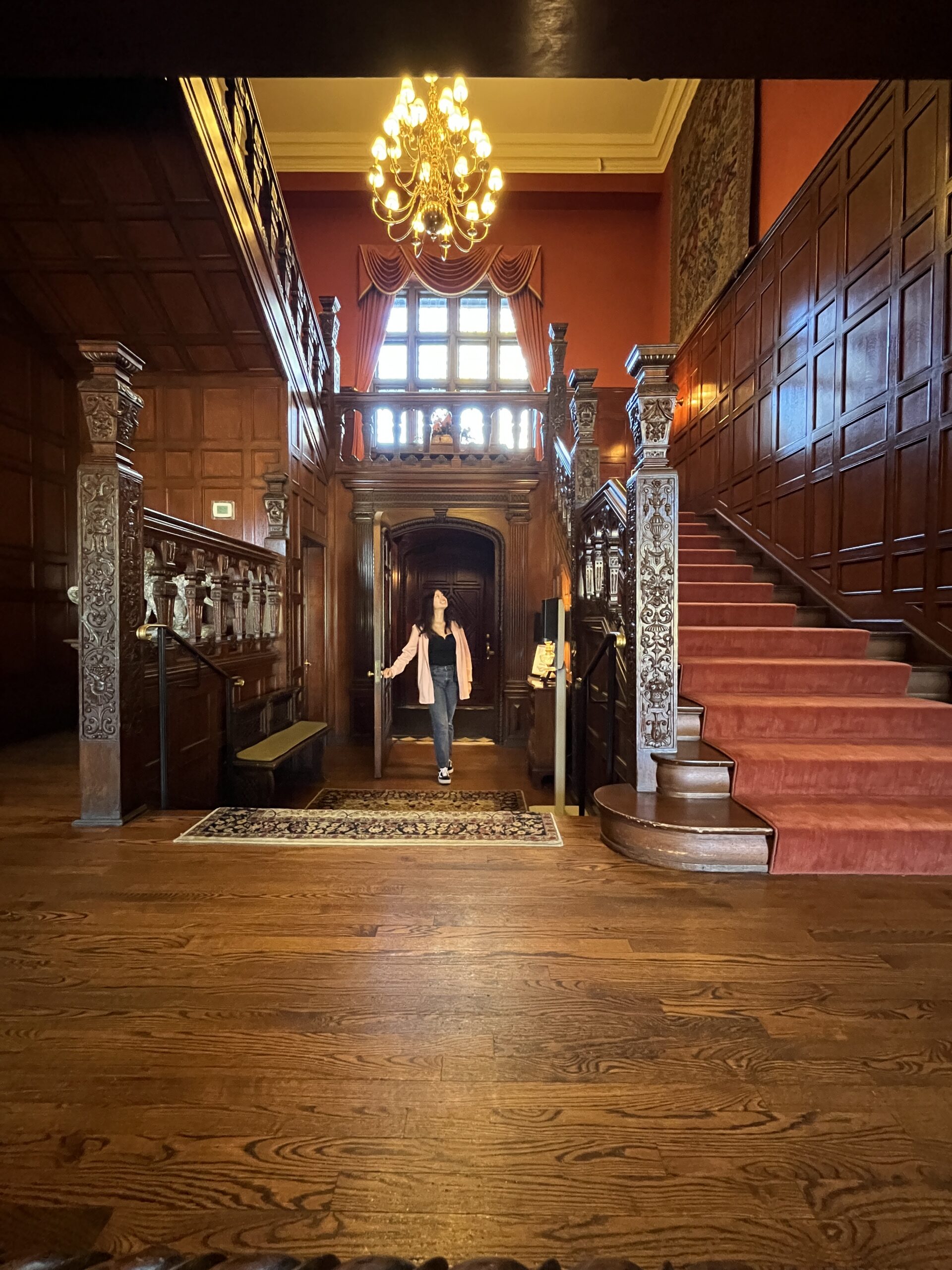
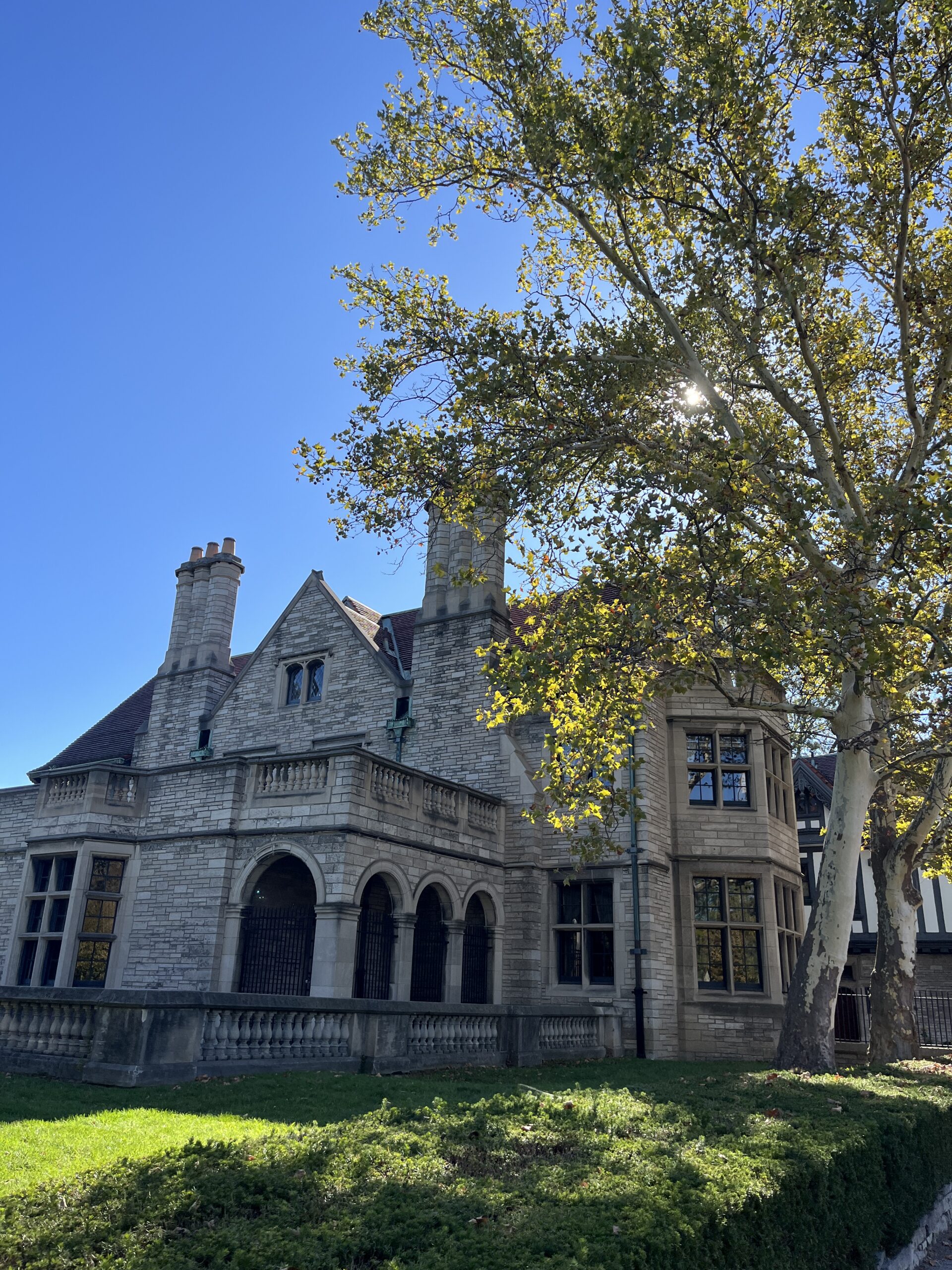
Surrounded by a park, which is free to roam year-round, this estate also includes a Coach House and a Gate House. Walking through a series of interconnected pathways is safe and accessible. I highly recommend ordering a coffee or a matcha from Anchor Coffee and taking a stroll here. There are also public tours available throughout the months of July and December each year; the summer to see the Manor in its natural state, in comparison to the winter, to see the holiday spirit.
War of 1812
Fort Malden National Historic Site | 100 Laird Ave S., Amherstburg
Fort Malden played a major role in the War of 1812 and later the Rebellions of 1837-38. Soldiers stationed here were part of the British defense of Upper Canada, protecting against American invasion. The site includes original barracks, the soldiers’ quarters, and a reconstructed cookhouse – where I got to sample roast beef and potatoes made the 19th-century way! Soldiers typically had only two meals a day, breakfast and dinner, until the tea cake was introduced to boost morale.
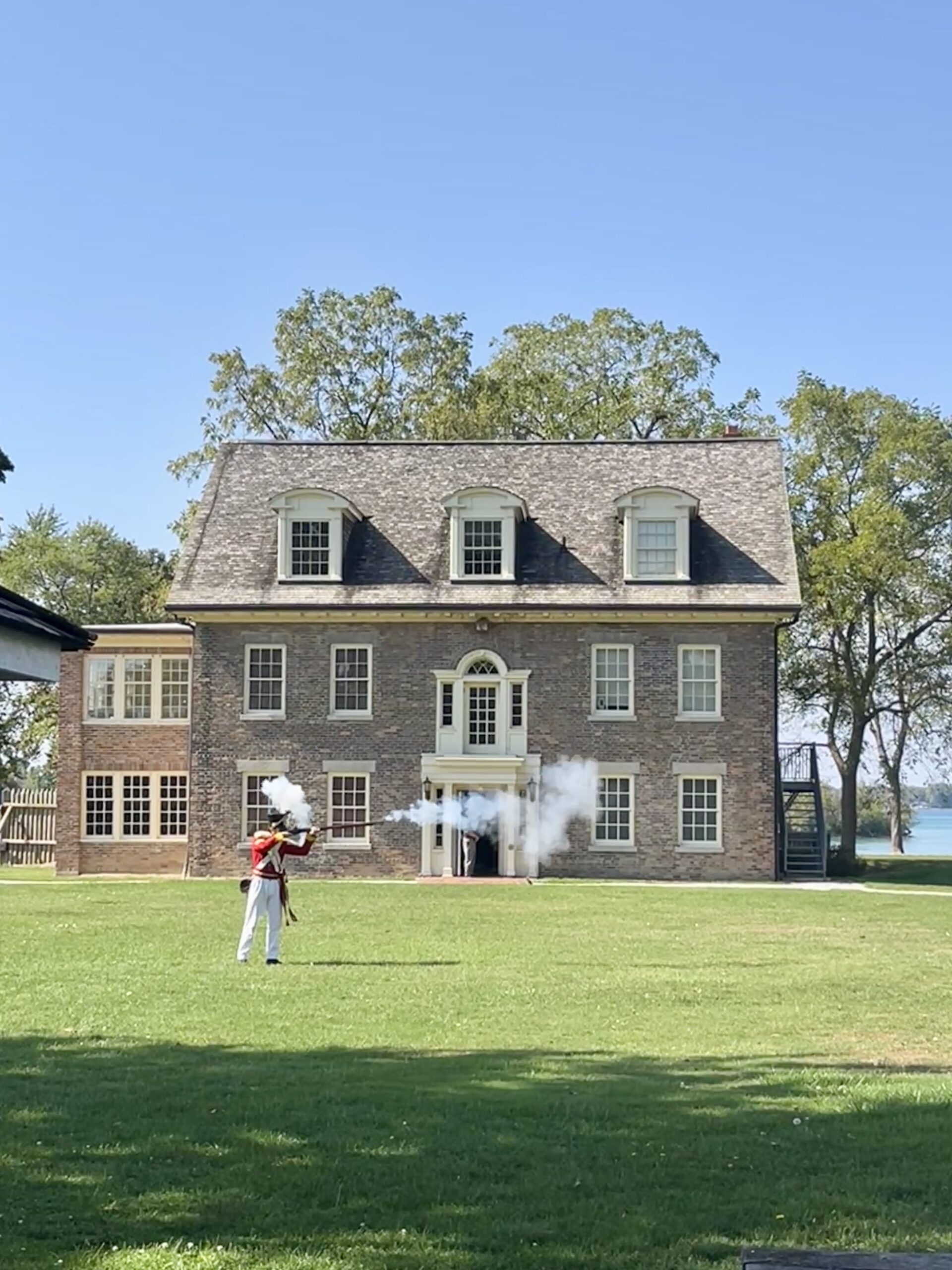
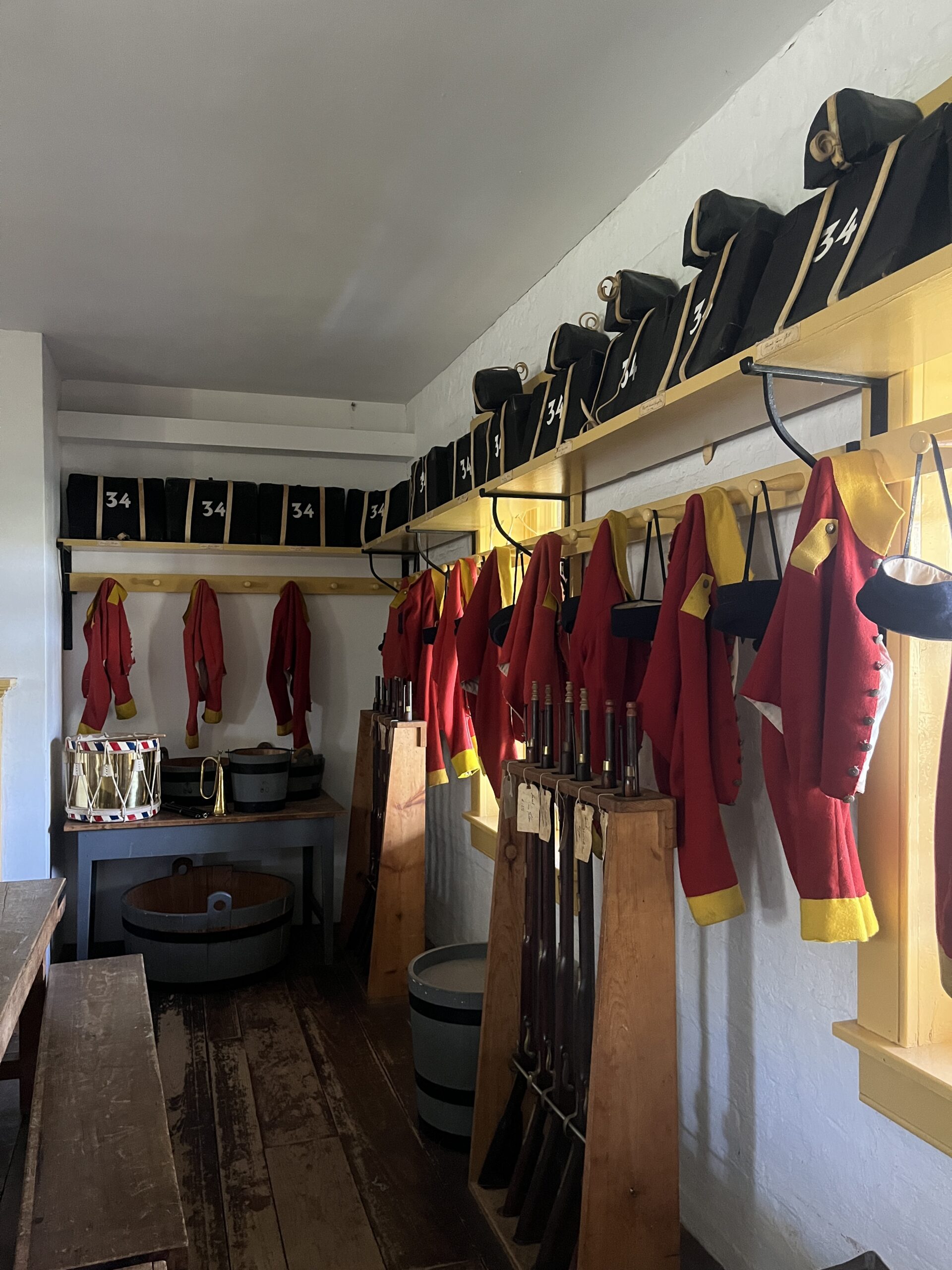
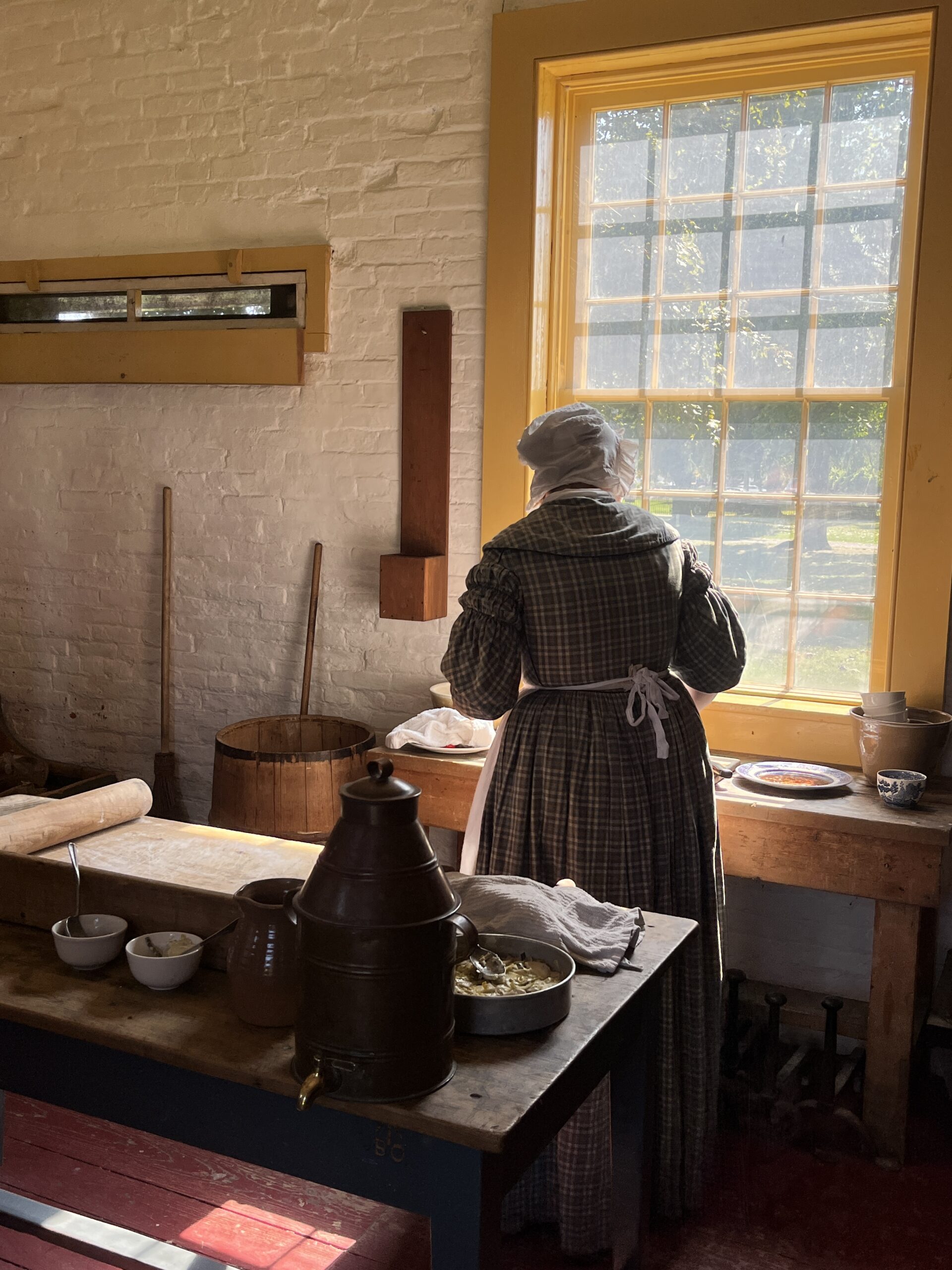
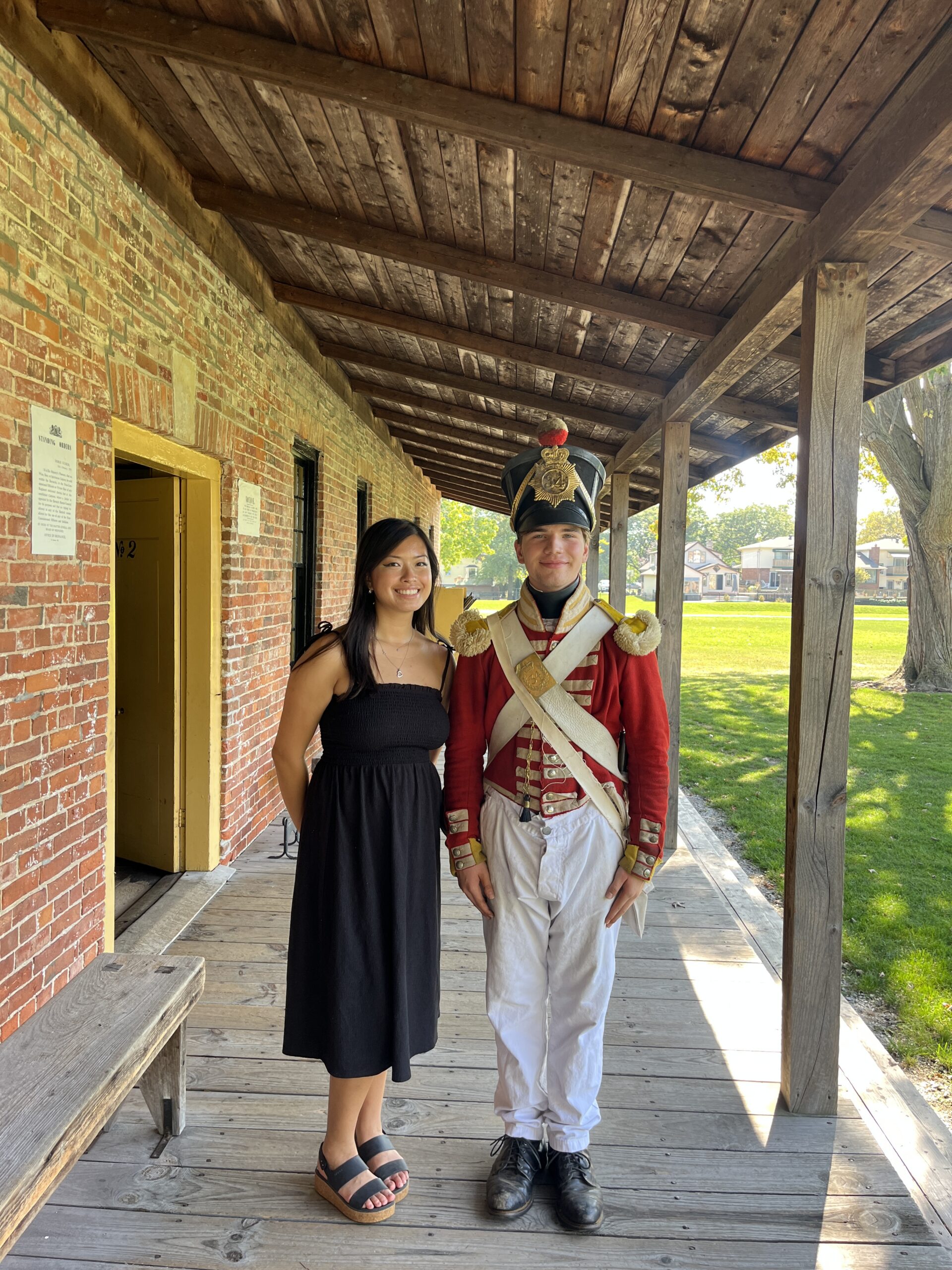
Some interesting facts I learned from our guide; soldiers earned one shilling a day which is equivalent to $10 per day. Some even entered lotteries for a chance to have their families join and live with them on site. One of the coolest experiences is watching a live musket demonstration – did you know that soldiers can reload it every 15 seconds? It’s a fascinating, immersive experience with stunning waterfront views – a must for any history lover.
Agriculture and French History
Museum Windsor – Maison Francois Baby House | 254 Pitt St. W., Windsor
Once a home to the influential Baby family, this 18th century house now serves as a museum showcasing Windsor’s French roots and agricultural past. Built in 1812, it stood as both a family home and headquarters during the War of 1812.
Inside, you’ll find military relics, household items, and rotating exhibits that explore how farming, trade, and culture shaped earlier life along the Detroit River.
Our Lady of the Assumption Parish | 2735 University Ave W., Windsor
The Story of Assumption Church begins in 1701. French settlers and Jesuit missionaries established a mission among the Huron-Wyandote people, naming it Our Lady of the Assumption among the Hurons. By 1767, it had become the Parish of Our Lady of the Assumption, the oldest continuous Catholic parish in Ontario. Over the centuries, it grew from a humble wooden chapel to the grand Gothic Revival structure that still stands today near the Ambassador Bridge.
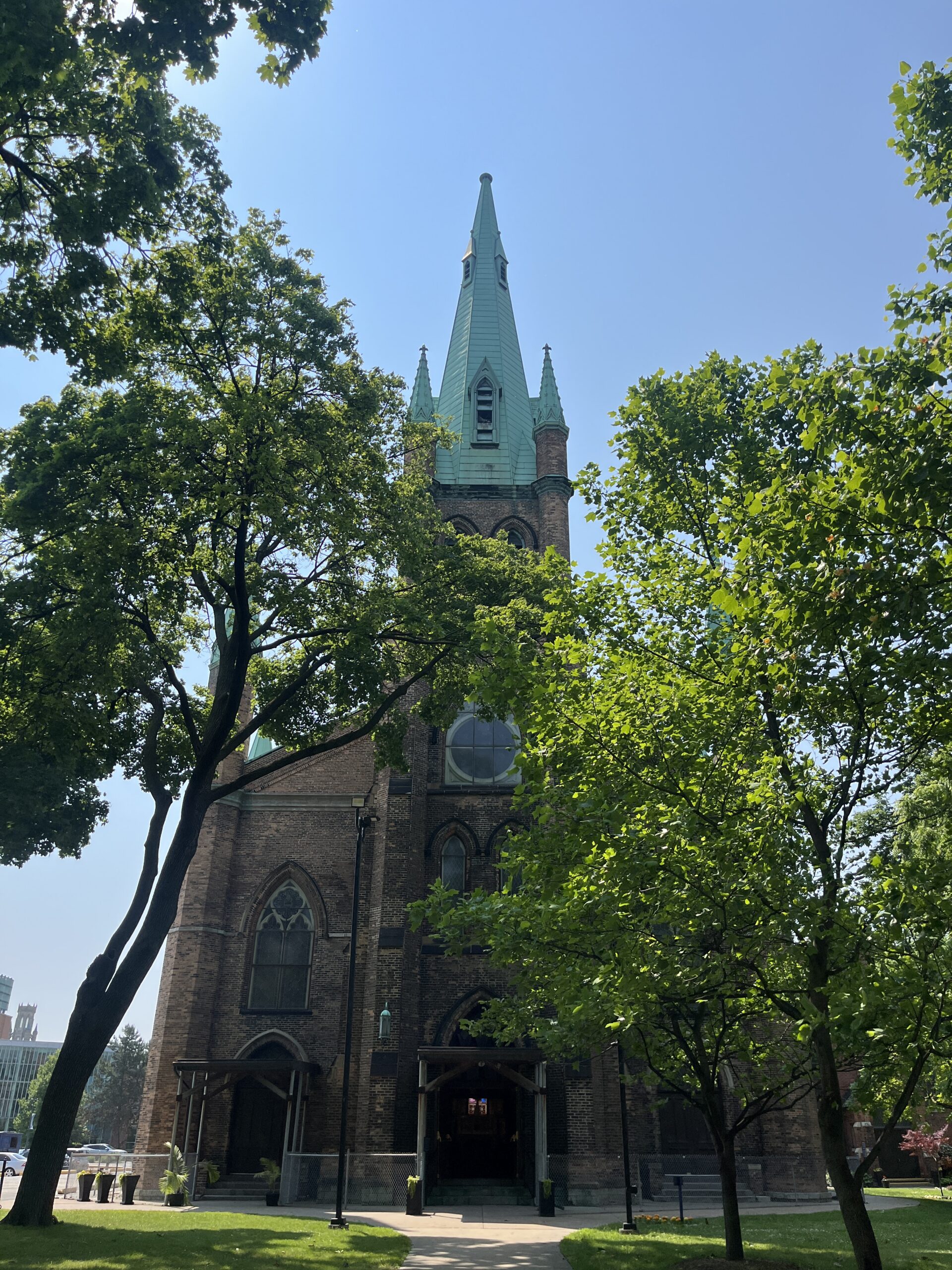
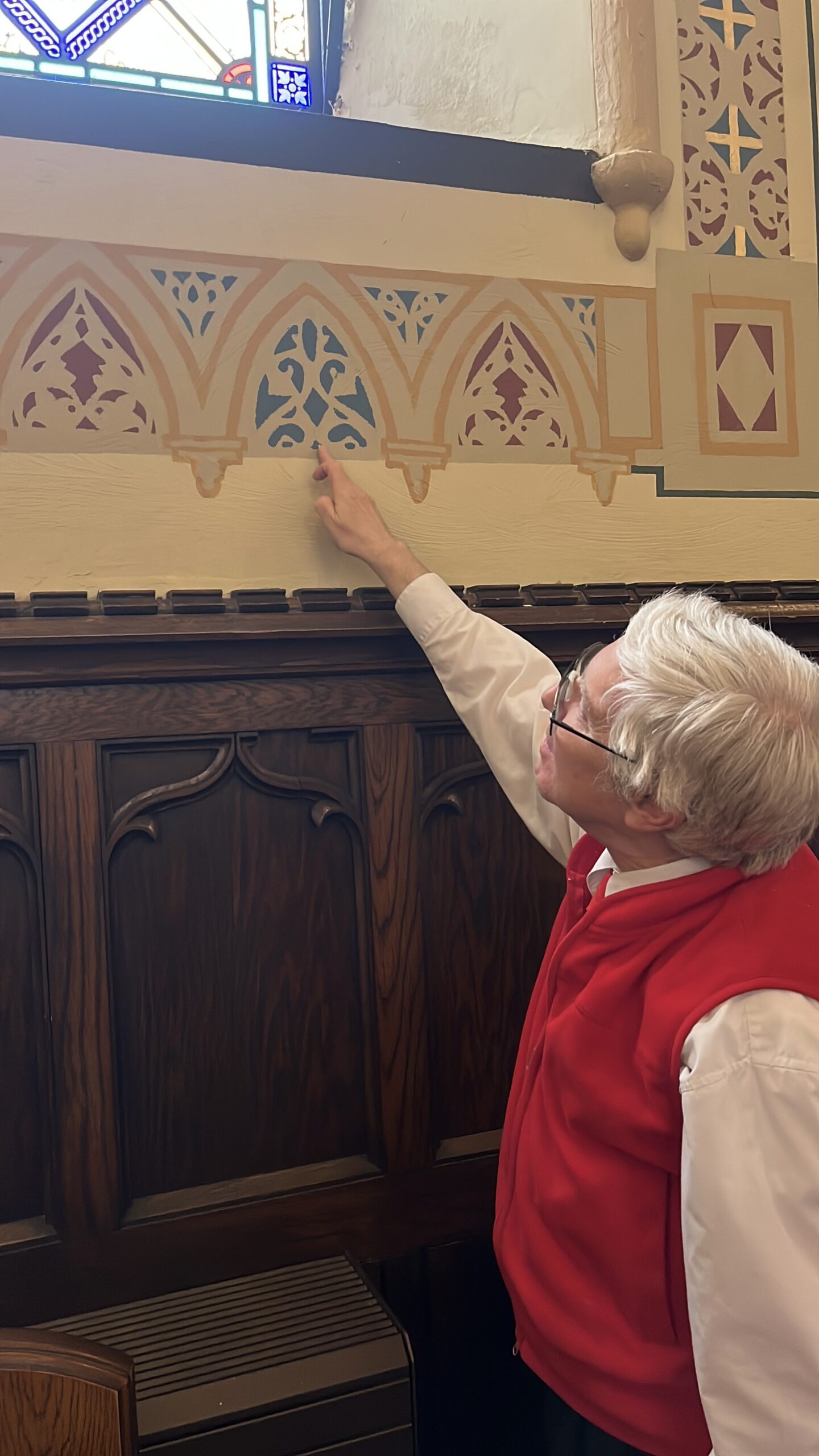
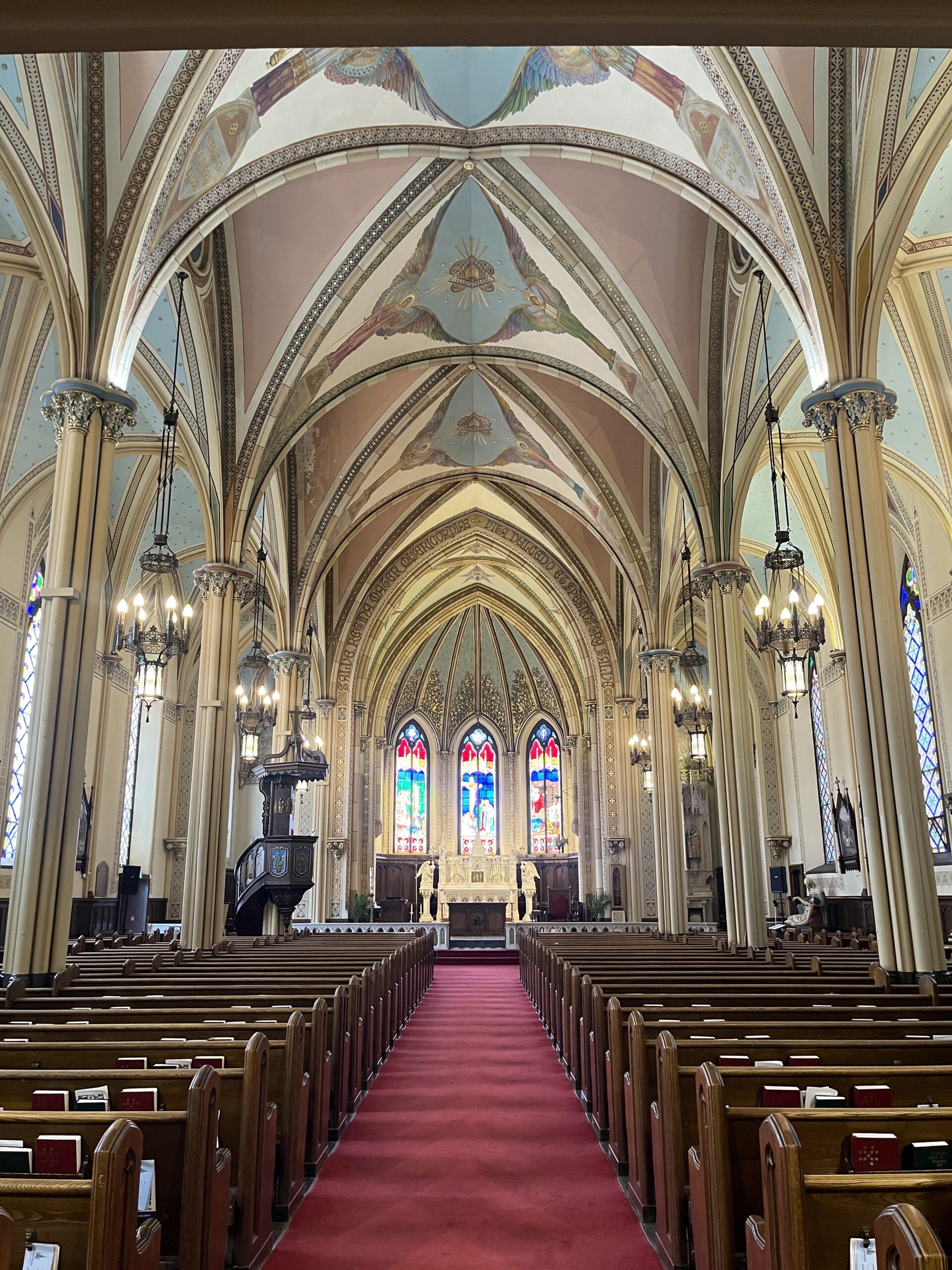
Each era brought new artistry – from intricate stained-glass windows to marble altars and the beautiful Rosary Chapel. After closures and challenges in the 2000s, Assumption Church made a miraculous comeback. Following major restorations, doors reopened in 2019 to a full house – a living testament to over 250 years of faith, resilience, and renewal. I highly recommend getting a free tour as you learn a lot of rich history, symbols, indigenous art, and more. Ask for Terry Kennedy – one of the most enthusiastic, creative storytellers I know!
Tips for Your Historical Adventure
– Start small: pick one theme (like Transportation) and explore a few stops at a time.
– Don’t skip the small details: plaques, art, and more.
– Bring your phone: you’ll need it for check-ins, trivia, and digital maps.
– Be a tourist: capture moments as you’re exploring and check out the gift shops.
– Stay curious: every stop reveals a new story.
Final Thoughts from Your Adventure Buddy
History isn’t just something you read in textbooks, – it’s woven into the streets, buildings, and stories all around us. With this guide, you’re not just sightseeing – you’re connecting with the people, places, and moments that built Windsor Essex into the community we love today.
So, what do you say, time travelers? Grab your Crossroads Passport, step into the past, and see where our stories lead next. Because in Windsor Essex, every corner has a secret, and every adventure tells a story. See you on our next adventure.
Original blog post by Nina Ngo @_ninango