TRANSPORTATION HISTORY IN WINDSOR ESSEX
From boats, cars, planes, trains and streetcars, the Windsor Essex region has a rich history in transportation. Dating back to 400AD, the Indigenous Peoples used the Detroit River as an important link between Lake St. Clair and Lake Erie.
As a key transportation route, the Detroit River allowed for the development of community and industry on both sides of the border. Currently, the Detroit River is the busiest international waterway in North America, and the Ambassador Bridge is the busiest North American international border crossing in trade volume.
Transportation Historical Sites in Windsor Essex

Ford City
Windsor Essex is known as the automotive capital of Canada with a culture of automobile heritage that dates back to the early 1900s. Henry Ford purchased Walkerville Wagon Works, which became Ford Motor Company of Canada, the birthplace of the Canadian automobile in 1904. The thriving community that grew around the plant was named Ford City in 1912. By the time the Model T passed the torch to the Model A in 1928, the town boasted 16,000 people of many nationalities. Ford City became a boomtown that continued to flourish throughout World War II. Today, you can walk down Drouillard Road and see remnants of its historic past while you experience the story of Ford City through Windsor’s largest collection of murals. Simultaneously, Hiram Walker was expanding his footprint in the area by establishing a railway system in Essex County to support his business interests and connect Windsor’s Walkerville district with other towns. This included a line to Kingsville, Leamington and London, with multiple stops along the way. Today the rail lines in Essex County have been converted into a Greenway Trail for cycling and hiking, and the Kingsville station is a popular restaurant.

Canadian Transportation Museum & Heritage Village
Take a walk-through time as you visit the Canadian Transportation Museum & Heritage Village and spend a day discovering a century of vintage automobiles, including the numerous Model Fords currently on display.
It is time to rev up your engine and get ready to experience the sites showcasing Windsor Essex’s roots of transportation.

Canadian Aviation Museum
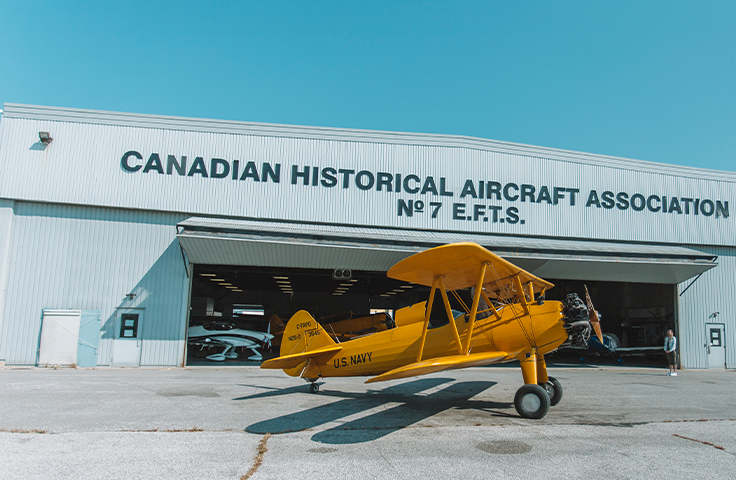
Stop in at the Canadian Aviation Museum, where aviation history comes alive! Situated in the original hangar of #7 Elementary Flying Training School and built in 1940 as part of the British Commonwealth Air Training Plan, volunteers are presently restoring the City of Windsor’s FM 212 Lancaster bomber as well as a Mosquito Bomber KB161.

Streetcar No. 351
Did you know that Windsor was the first city in Canada to have an electric streetcar? Visit the restored Streetcar #351. In the 1920s, this car was state of the art, being one of only four in the area that had a smoking compartment for travellers!